I’m starting this essay off with a big fat disclaimer.
Stuck is an overused concept in grief. Honestly it’s a tool of the productivity-obsessed grief illiterate culture we live in. It falsely assumes there is a consistent and “normal” pace at which we are meant to “progress” in our grief. Stuck implies that any period without significant change, any season of sameness, is a problem to be solved. That’s utter bullshit. See? That made me feel better.
AND, I know that the feeling of stuckness in grief is real. How? Because I’ve been there, felt that. In fact, I’m in a bit of a stuck place as I write this. So, what I’m sharing today is also what I’m actively practicing in my life on a daily basis.
Maybe we can do this together?
We’ve read the books, listened to the podcasts, talked with our therapists, friends, and family members. We’ve moved our bodies, attempted to eat nutritiously and sleep enough(ish). We understand that grief is non-linear, messy, and that it impacts our physical, cognitive, emotional, relational, and spiritual well being.
We still find ourselves feeling stuck, with the same thoughts looping around in our head, and in the stories we tell others about our grief. What I’ve learned over my nearly 14 years as a widow, 11 years as a grieving friend, and in my 20+ year career as a narrative-therapy trained social worker, is that words make worlds.
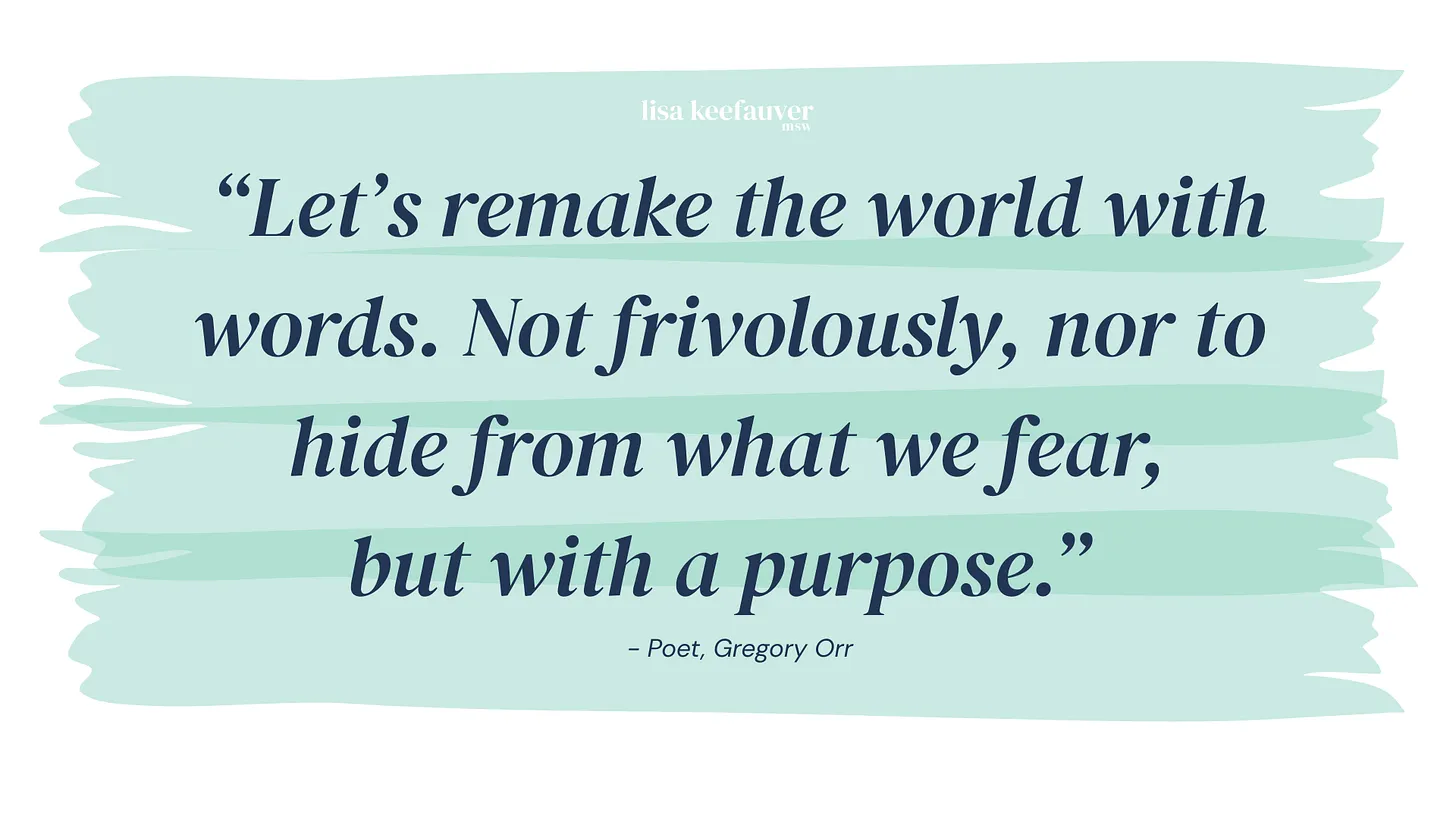
Words Make Worlds
As I shared in my conversation with Grief Researcher Mary-Frances O’Connor earlier this season on the podcast, words are powerful in our grief. They can either close us in or open us up. They can make us feel isolated and problematic or part of the human community. Words can add to our sense of stuckness, resistance, and avoidance.
Or they can offer us, though not easy, a path forward, a sense of expansion and belonging. That’s why it’s so important to tend to our words when we’re invited to tend to our grief.
These are the 5 most commonly used words that contribute to our sense of stuckness, causing us to suffer unnecessarily in our grief. You will often find them used by the critical inner-narrator in your head. They might show up in how we talk to others about our grief. You will notice too, that it’s often how others are talking to you about your grief.
But
When we use the word but in our grief, we’re amplifying the harmful myth that only one thing can be true at a time – we’re either grateful or sad, grieving or joyful. This word negates all the thoughts, feelings and sentiments that come before it. It can sound like, “I’ve felt much more at ease these past few weeks, but yesterday I was a crying mess.” Okay that’s technically true. Yet what would happen if you replaced but with and? How would that change what you see as possible (or not) going forward?
Always
I often catch clients using this one, “I’m always letting my family down because I’m just so sad all the time.” Why is that harmful? Well, like the word but, it negates facts – like their family may never or certainly don’t always feel let down. It also hides the truth that there are times when sadness isn’t at the forefront. Always, like it’s counterpart never isn’t just false, it’s limiting, cruel, and contributes to the notion that we lack agency in our lives.
Never
Never is the shifty twin of always. They often hang around together. This word also contributes to our sense of stuckness by denying the moments of change, or ease, or lightness we sometimes experience, no matter how small they are. Never is also a dark cloud preventing us from noticing the subtle shifts and transformations happening as we metabolize our grief. You might have said something like, “I’ll never feel better.”
Equal parts heart, humor & holding space, with a judicious use of cussing, Lisa Keefauver is a narrative-therapy trained social worker, widow, and cancer survivor turned grief activist, podcast host, author and speaker helping you center aliveness in a world full of loss.
Find Support: www.lisakeefauver.com
Learn and Connect: AFGO with Lisa Keefauver on Substack
Listen and Learn: Grief is a Sneaky Bitch Podcast
Watch and Learn: TEDxTalk – Why Knowing More About Grief Can Make it Suck Less
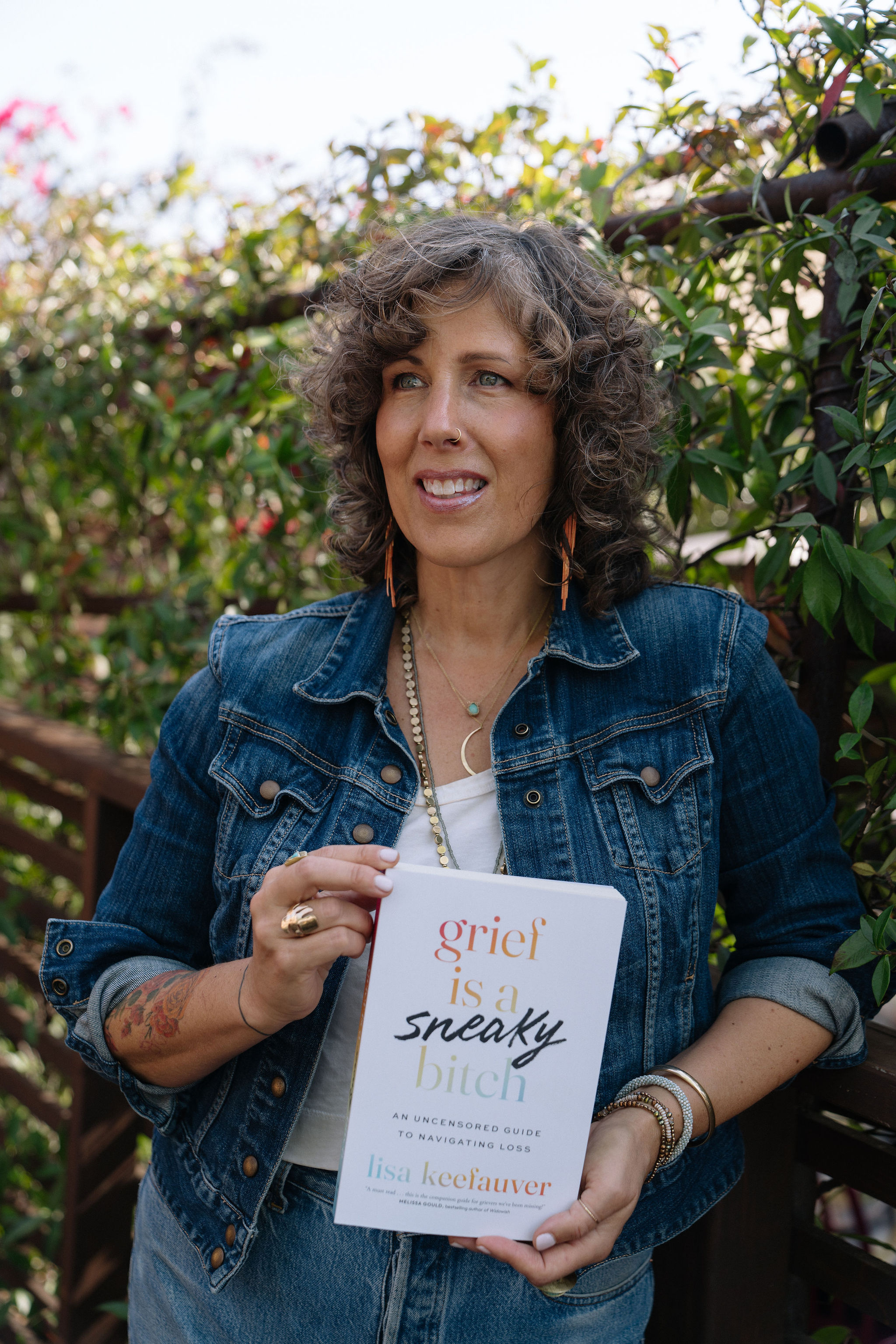
Lisa Keefauver
1 articlesLisa Keefauver is a narrative therapy-trained social worker and widow turned Grief Activist who transformed her personal and professional experiences with loss into a mission to reimagine grief. For more than two decades, she has dedicated herself to the healing power of holding space and bearing witness, helping transform people's relationship with grief. As host of a top-rated grief podcast, TEDx and keynote speaker, grief guide, grief-smart workplace consultant, and author of the highly-acclaimed book, Grief is a Sneaky Bitch: An Uncensored Guide to Navigating Loss, she is expanding our collective understanding of and experience with grief. Learn more about her work at www.lisakeefauver.com and join her Substack community at AFGO with Lisa Keefauver.