Grief doesn’t have an end date. If you’ve lost someone close to you, you probably know that already, even if the people around you seem to have moved on. Love doesn’t have an end date either. It changes shape over time, and finding small, ongoing ways to keep a person present in your life can make the loss easier to live with.
A lot of people feel the urge to do something lasting after the funeral or memorial service is over. The service brings everyone together for a day. It’s the weeks and months afterward, when the cards stop arriving and the house gets quiet, that many people want somewhere to put their love and their memories. That urge is normal. There’s also no correct way to act on it. What helps one person might feel wrong to someone else, and both are fine.
This article covers five ideas: planting flowers or a tree, building a memorial garden, choosing sustainable memorial options, making keepsakes, and honoring the values your loved one lived by. Use whatever fits and skip the rest.
Planting Flowers or a Tree in Their Memory
Planting is one of the simplest ways to remember someone. Watching something grow gives you a reason to look forward, even a small one. A new leaf or the first bloom of the season can lift a heavy day a little.
It’s also easy to start. You don’t need gardening experience or a big yard. One plant can become the place where your memories gather, and how much attention you give it is up to you.
Here are a few ways to make the choice personal:
- A favorite flower or color. If your grandmother always kept yellow roses on the kitchen table, planting them brings back a sight you knew well.
- A season that matters. Some people pick a plant that blooms near a birthday or anniversary, so it marks those dates on its own.
- A setting you’ll actually visit. A backyard bed, a pot on an apartment balcony, a spot in a local park (ask permission first), or a plot in a community garden can all work. Pick somewhere you can get to easily and where you feel at ease.
Planting is something you do with your hands, and it gives you a place to sit and think about them. Every time you water it, you’re saying their name in your own way.
Creating a Memorial Garden
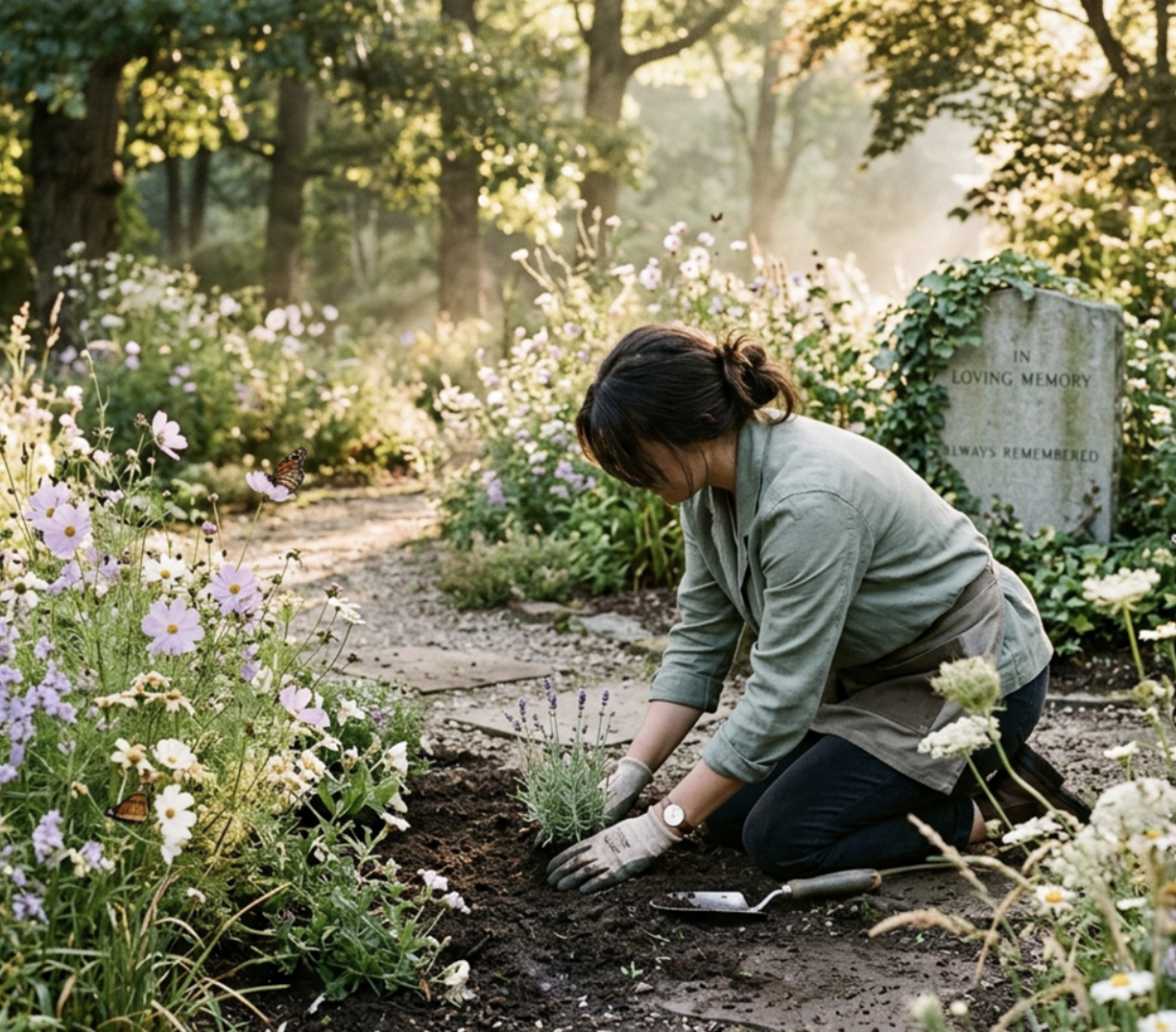
A single plant is a good start. A memorial garden goes a step further. It’s a space set aside for remembering, and it can grow and change over the years, much like your grief does.
A few elements can make the space feel welcoming:
- Plants that bloom at different times. Spring bulbs, summer perennials, and fall color mean something is always in flower, so the garden has life in it all year.
- A place to sit. A simple bench or a flat, smooth rock gives you a spot to stay for a while, whether you want to think, talk out loud, or say nothing.
- Paths and sounds. A stepping-stone path, a wind chime, or a small water fountain can make the space feel calmer.
- Personal touches. An engraved stone, a small plaque, or a garden ornament they would have liked can make it clearly theirs.
Gardens help because grief needs somewhere to go, and garden work gives it a place. Weeding, watering, and pruning are jobs you can do when you can’t find the words. A garden can also become a place where family meets on hard days like birthdays and holidays, so no one has to remember alone.
If you don’t have outdoor space, a windowsill garden can do a similar job. A few pots of herbs, succulents, or flowers in a sunny spot are enough to remind you of them each day.
Choosing Sustainable or Biodegradable Memorial Options
If your loved one spent their time outdoors, or cared about the environment, you may want a memorial that gives something back. Sustainable options fit the way they lived. Here are some to consider:
- Memorial seed paper cards. These cards have seeds embedded in the paper. When planted, they grow into wildflowers. They work well in place of traditional memorial cards, since guests can take one home and plant it.
- Biodegradable urns. Some are made to feed the soil and grow a tree or plant. Others dissolve in water and are meant for scattering at sea. Both are designed to return ashes to nature.
- Ocean, water, or tree scatterings. These are meant to nourish soil, forests, or marine life. If you’re thinking about one, check local rules on where scattering is allowed, because they vary a lot by location.
- Conservation gifts. You can donate to an environmental group or protected land in your loved one’s name. It helps protect places they loved.
None of these is better than the others. Choose the one that suits the person you’re remembering.
Creating Meaningful Keepsakes
Sometimes you want something you can hold. Keepsakes are small objects that keep a person close in daily life, and they can help when words don’t. Here are some ideas, sorted by type.
Written and visual keepsakes. Handwriting is personal, and seeing it again can hit hard in a good way. You could frame a handwritten recipe, a note, or a favorite quote. You could also hire an artist to make a line drawing from a photo you treasure.
Sensory keepsakes. Smell and sound are closely tied to memory. You might keep a bottle of their usual scent, save a voicemail or recording of their voice, or make a playlist of songs they loved. One whiff of a familiar perfume or a few bars of an old song can bring someone back to mind fast.
Fabric keepsakes. Clothes hold warmth. A quilt or pillow made from a loved one’s flannel shirts, jackets, or ties lets you wrap yourself in something they once wore. If you don’t sew, many seamstresses make these to order.
Jewelry. A simple ring, a locket, or a small piece engraved with their initials or an important date keeps them with you through the day. Many people like that the meaning is private, and no one else needs to know it.
A keepsake doesn’t have to be fancy. The plain objects tied to ordinary moments often end up meaning the most.
Finding Ways to Create a Lasting Tribute That Reflects Their Personality or Values
Some of the best tributes aren’t monuments at all. They’re ways of continuing what the person cared about. A good starting question is, “What was this person like at their best?” The answer often points to something that fits.
Here are a few examples:
- The adventurer. If they were happiest outdoors, you could sponsor a youth trip, volunteer on a trail crew, or dedicate a park bench along a path they liked.
- The artist or creative. Donating art supplies to a local school or supporting a community arts program keeps their creativity useful to other people.
- The animal lover. Volunteering at a shelter or paying adoption fees in their name gives pets a second chance, which is something they likely would have cheered for.
- The helper or mentor. Supporting mental health causes, mentoring programs, or a student scholarship extends their kindness to people they never got to meet.
These tributes can also bring you into contact with other people. Volunteering or giving to a cause your loved one supported often puts you around people who know them or understand what you’re going through. It can give your grief a purpose, too.
One Last Thing
There’s no set timeline for grief and no rulebook for remembering someone. You might plant a tree this spring and make a keepsake next year. You might try something and find it doesn’t feel right, which is fine. Honoring someone isn’t a task you finish. You can do it in small ways for as long as you want to, and change how you do it as you change.
Whether you choose one flower or a full garden, what matters is that it feels true to you and to the person you’re remembering. Be patient with yourself, lean on the people close to you, and let whatever you choose help in its own time.

Shihui Luo
1 articlesShihui Luo is the founder of Seed Bloom Gifts, where she helps families find meaningful, sustainable ways to remember the people they love. Seed Bloom Gifts offers plantable seed paper favors for funerals and celebrations of life, giving families a heartfelt and hopeful way to honor a loved one while giving something back to the earth.