Nobody prepares you for the meeting.
The service is over. The casseroles have stopped coming. And somewhere in the middle of the hardest week of your life, someone asks the question no one wants to be the first to answer: what do we do with the ashes?
Your brother wants them scattered at the lake where Dad taught all of you to fish. Your sister, three states away, wants a place she can visit. Mom has been quiet about the whole thing, and you are not sure whether that means she agrees or that she cannot bear to talk about it yet.
Almost every family runs into some version of this. Very few talk about it. So the arguments happen in kitchens and group texts, and people who love each other walk away feeling like they have been fighting over the last piece of the person they lost.
If that is where you are right now, I want you to hear this first: you are not a broken family. You are a family that loves someone in different ways, all at once, with no map for what comes next.
Why This Is So Hard
Ashes feel final in a way nothing else does. They are the last physical part of someone, and every decision about them feels like it has to be the right one, forever.
The truth is that each person at the table is grieving a slightly different relationship. A spouse is grieving a partner. A child is grieving a parent. A sibling is grieving the one person who remembers childhood the way they do. When those different griefs meet a single decision, it can feel like there is only room for one of them to win.
There is more room than that.
You Do Not Have to Choose Only One
Here is what most families do not realize until someone tells them: cremated remains can be shared. There is no rule that says everything has to go to one place or to one person.
A few ways families have made room for everyone:
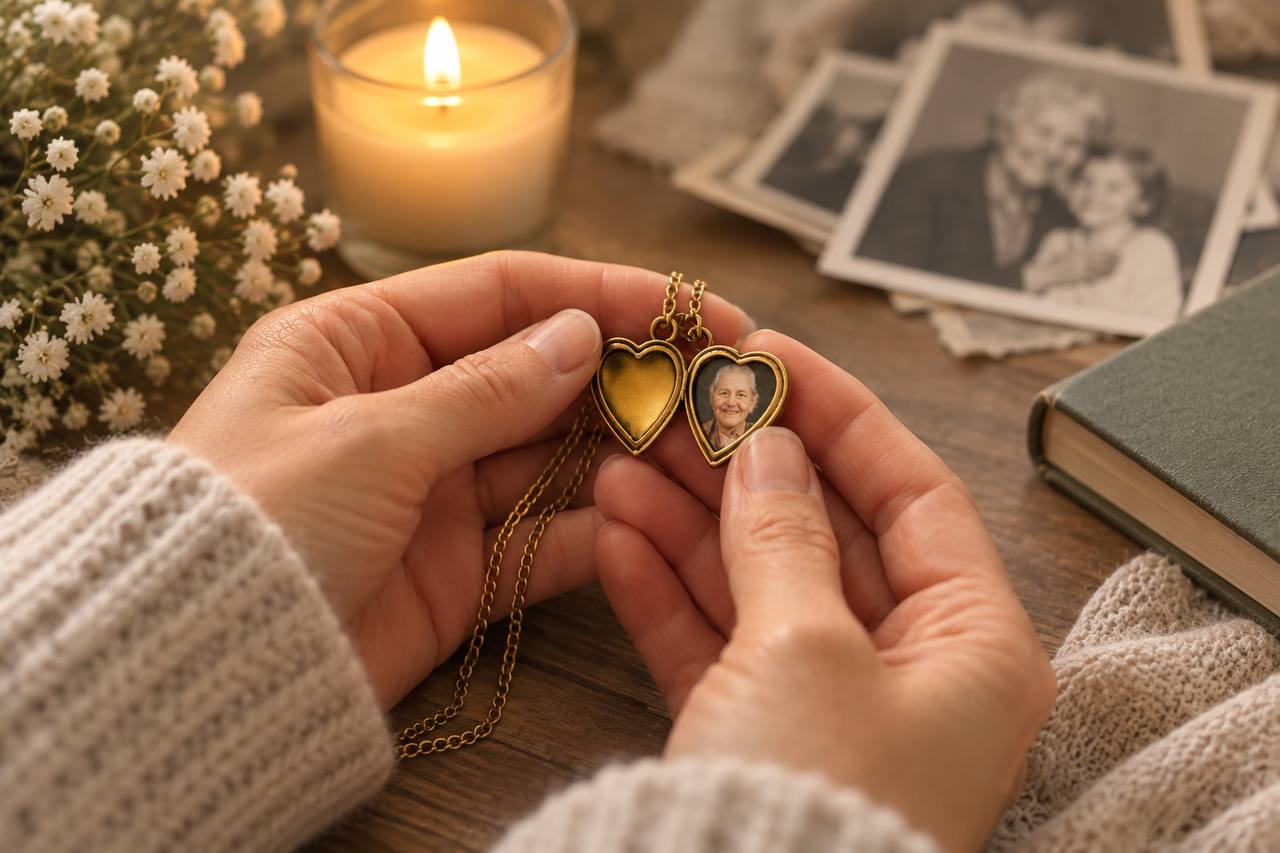
A shared resting place plus individual keepsakes. Most of the ashes are placed somewhere everyone agrees on, whether that is a columbarium niche, a family plot, or a garden at home. Then each person who wants one keeps a small portion close in their own way. A small keepsake urn on a shelf. A portion held inside a piece of cremation jewelry worn on the ordinary days. A small amount set aside for a scattering trip that can happen whenever the time feels right.
Scattering in more than one place. The lake where he fished and the coast where she grew up do not have to compete. Families often split a scattering across two or three places that mattered, sometimes on different trips, sometimes years apart.
Letting each person choose their own ritual. One sibling plants a tree. Another keeps a portion in a locket. Another wants nothing physical at all and instead builds an online memorial where the whole family can share photos and stories from wherever they live. None of these are wrong, and none of them cancel out the others.
Funeral homes and crematories divide remains regularly and will do it respectfully when asked. Most will provide small containers for each family member. It is a normal request. You do not have to apologize for making it.
How to Have the Conversation
Knowing the options helps. The harder part is usually the talk itself. A few things families have told me made it easier:
Start with what they would have wanted, not what you want. If your loved one left any wishes, in writing or in passing, put those on the table first. Everything else builds from there.
Let everyone name what they need. Go around and let each person say, without interruption, what would bring them comfort. Sometimes the person who wants to scatter everything just needs to know they can be part of a scattering. Sometimes the person who wants to keep everything only needs a portion they can hold.
Separate the decision from the timing. You do not have to settle it this week. Ashes can wait, safely and respectfully, for as long as a family needs. Taking the pressure off the calendar takes a lot of pressure off the room.
Ask someone neutral to sit in. A funeral director, a grief counselor, a pastor, or a trusted family friend can keep the conversation from drifting into old arguments that have nothing to do with the ashes.
Agree that no one loses. Say it out loud. Whatever the plan ends up being, the goal is that each person walks away with a way to stay close to the person you all lost.
What You Are Really Deciding
Underneath every one of these conversations is the same question: so how do we keep them close now that they are gone?
For some, the answer is a place to visit. Others use a memorial page on a hard night. For some, it is something they can hold, a pendant resting over the heart on a Tuesday afternoon when the missing sneaks up on them.
Most families find the answer is not one of these. It is all of them, spread across the people who loved that person, each carrying them forward in their own way.
That is not dividing someone. That is making sure they are never far from anyone who loved them.
I promise I will always remember.
Jordan Colton is the founder of Cherished Emblems, where he and his team have helped thousands of families keep their loved ones close.
Jordan Colton
3 articlesJordan Colton is the founder of Cherished Emblems, a cremation jewelry company dedicated to helping people honor the ones they love. Since 2018, Jordan and his team have helped over 19,000 families find comfort through beautifully crafted keepsakes designed to hold ashes, memories, and meaning. A childhood cancer survivor, Jordan's early life experiences taught him the value of remembrance and the quiet strength it offers in hard times. His personal connection to grief and healing fuels the compassionate mission behind Cherished Emblems: to help others feel close to the people and pets they've lost, every single day. With a background in marketing, and memorial design, Jordan brings both technical expertise and heartfelt purpose to everything he creates. What began as a response to the loss of a beloved family pet has grown into a trusted resource for families seeking comfort and connection through memorial jewelry. Outside of work, Jordan enjoys exploring Oregon with his wife, cooking, and continuing to build a place that puts people first—especially those walking through grief.