
The Ache for “The Old Days”
There’s a specific kind of homesickness that has nothing to do with a place. It’s the quiet ache of missing the life you had before loss.
It’s the ache for a time, and our loved ones being alive within it. The Tuesday you didn’t know was the last easy Tuesday. The version of your life before the phone call, before the diagnosis, before the funeral home asked you to pick a casket or urn (that was the most surreal part for my dad and me after my mom died). You’d give almost anything to go back. Not even to fix anything, just to sit in it again for five more minutes.
I know that ache intimately. I lost my mom in December 2019 and my dad around six months later, in July 2020, both to cancer. I’m an only child, so when they died, the family I grew up in of just us three and our Bichon Frise—the one that made sense of who I was—went with them. What was left was a version of “the old days” I couldn’t get back to no matter how hard I tried. And trust me, I tried. I’d watch family videos, re-read their old texts, listen to voicemails, and just daydream about my childhood. I recognize how truly blessed I was to have that childhood.
You may recognize this feeling as yearning. An important distinction is that it’s different from sadness.
Sadness says, “This hurts.”
Yearning says, “I want it back, specifically, the way it was.”
I think that’s why so many of us find ourselves craving a slower, simpler time (I do, at least). Not just before our person died, but before we knew loss could do this to a life. We’re not just missing a person, we’re missing an entire era. The one where we still believed we had time.
It’s Not the Past We’re Missing, It’s the Proof
Here’s something I’ve noticed, both in my own grief and in the hundreds of grievers I’ve talked to since: we don’t only crave the old days themselves. We crave the proof that they happened. Something we can hold. Something slower than a text message and more permanent than a story we tell ourselves that gets a little blurrier every year.
I felt this hard more recently, when my cousin found a stack of letters my dad had written to my grandparents while he was in the army. Updates on his day, a line about missing home or asking them to say hello to his siblings… simple things. But for a minute, seeing those pages brought my dad back to me. His handwriting was right there in my hands. That’s the thing about grief and nostalgia: they’re both looking for something tangible to hold onto in a life that suddenly feels made of nothing but memory.
Why This Longing Isn’t a Setback
If you’re in the thick of missing “how things used to be,” I want to gently push back on the idea that this means you’re stuck. Longing for the old days isn’t the opposite of healing, it’s often part of it. It means you’re still in a relationship with what you lost. You don’t have to stop wanting the old days in order to move forward in your grief. Those two things can coexist, even when it feels like they’re pulling you in opposite directions.
What I’ve found actually helps isn’t forcing yourself to “let go” of that craving. It’s finding small, tactile ways to honor it. A ritual, a handwritten note, setting time aside to journal, a slower Sunday instead of getting caught up scrolling. Little anchors that don’t replace what you lost, but remind you that you’re allowed to carry pieces of the old days forward with you, even as you build something new.
But what does it actually look like to carry pieces of the old days into a new life? In Part 2, I’ll share the simple practices that helped me do exactly that—and why slowing down became an important part of my healing.
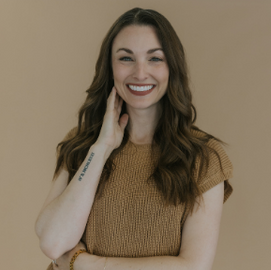
Tara Accardo
3 articlesTara Accardo is a Grief and Soul Purpose Coach and host of the Life With Grief Podcast. After losing her parents to cancer within six months of each other and navigating a traumatic birth experience, her journey of grieving led her to create Losses Become Gains—a community for fellow grievers that serves tools, resources, inspiration, and guidance on how to navigate grief, loss, and moving forward in life with both in tow. Through her podcast, one-on-one coaching and other modalities of support, Tara’s passion, calling, and commitment to uplifting and empowering fellow grievers runs deep.